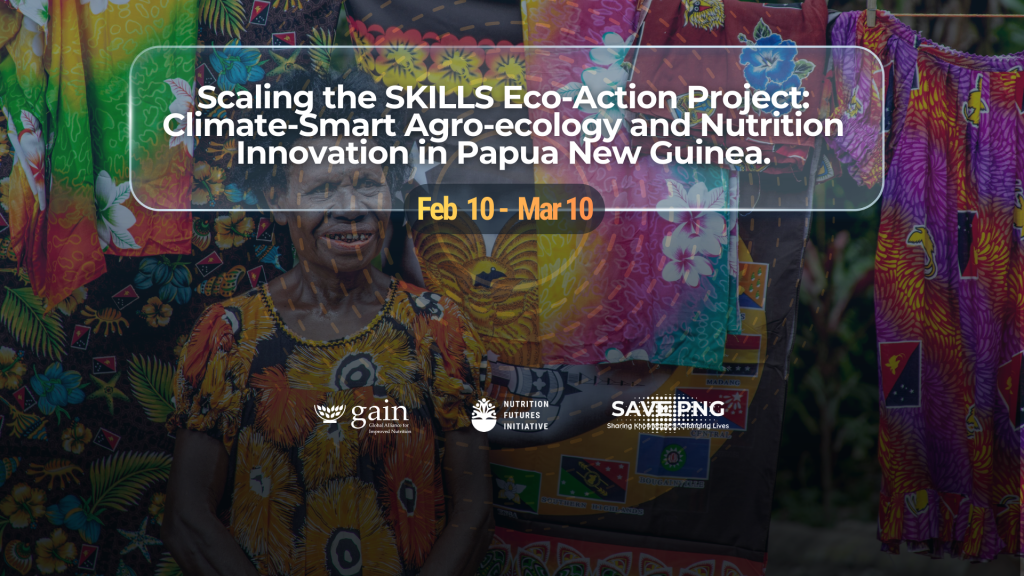
Scaling the SKILLS Eco-Action Project: Climate-Smart Agro-ecology and Nutrition Innovation in Papua New Guinea.

Rural communities in PNG face low agricultural productivity and chronic malnutrition, with nearly half of children suffering from stunted growth. This dialogue seeks to co-create a roadmap for scaling the SKILLS Eco-Action Project, which focuses on empowering women and youth through climate-smart agro-ecology, cash crop diversification, and digital peer-learning. The goal is to bridge the gap between government policy and community needs to strengthen climate resilience and local livelihoods.
Participants are invited to address these three core questions:
1. What innovative fundraising models (like blended finance) can unlock scalable solutions for indigenous knowledge?
2. How can localized ICT solutions translate peer-to-peer training into long-term behavioral change in remote areas?
3. What specific indicators are needed to measure the impact of livelihood sustainability in both family farming and biodiversity conservation?
Target stakeholders include national and local government agencies, agribusiness professionals, financial institutions, research specialists, and regulatory bodies.
1.Fundraising & Financial Management in PNG Context
Government Support via Cooperatives
Encourage government to channel support through registered cooperatives rather than direct subsidies. This ensures accountability and collective ownership, while aligning with national development priorities.
Commercial Bank Partnerships
Institutions like MiBank and the National Development Bank (NDB) can provide loans specifically earmarked for agro-ecology projects. Clear repayment plans tied to crop cycles and cooperative structures help reduce default risks.
Member Contributions
Regular contributions from cooperative members (small savings or share purchases) build a revolving fund. This strengthens ownership and ensures operations continue even when external funding slows.
Grants & Proposal-Based Funding
International donors and NGOs can be approached through structured grant proposals. These funds can cover start-up costs, training, and infrastructure, while local contributions sustain day-to-day operations.
Repayment Discipline
Loans should be tied to intended purposes (e.g., seed purchase, solar dryers, training). Transparent monitoring and community-led repayment schedules build trust with financial institutions.
Why This Works in PNG
Cultural Fit: Cooperatives resonate with PNG’s communal traditions, reinforcing collective responsibility.
Financial Inclusion: MiBank and NDB already have rural outreach, making them accessible to women and youth.
Resilience: Combining grants, loans, and member contributions reduces dependency on free subsidies, ensuring the project survives beyond donor cycles.By blending government-backed cooperatives, commercial bank loans, member contributions, and targeted grants, rural communities in PNG can manage money responsibly and ensure the SKILLS Eco-Action Project remains impactful and sustainable in the long run.
2. Localized ICT Solutions for Peer-to-Peer Training
Offline-first Mobile Apps
Apps designed to function without continuous internet, syncing when connectivity is available. Useful for remote PNG villages.
Community Radio + SMS Integration
Radio programs in local languages reinforced by SMS reminders to reinforce behavioral change (e.g., crop rotation, nutrition practices).
Digital Storytelling Circles
Women and youth record short videos of indigenous farming techniques, shared via WhatsApp or Bluetooth, creating a peer-learning archive.
Gamified Learning Modules
Simple mobile games teaching soil health, pest management, or nutrition, rewarding consistent practice with digital badges.
3. Indicators for Livelihood Sustainability & Biodiversity
Family Farming Indicators
Household dietary diversity score (HDDS)
Reduction in child stunting rates
Women’s income share in household earnings
Adoption rate of climate-smart practices (e.g., composting, agroforestry)
Biodiversity Indicators
Number of indigenous crop varieties maintained
Area under agroforestry or mixed cropping systems
Soil organic matter levels and water retention capacity
Presence of pollinators and beneficial species in farming zones
Cross-cutting Indicators
Youth participation in training and leadership roles
Community resilience index (ability to recover from climate shocks)
Integration of indigenous knowledge into local government policy frameworks
Scaling SKILLS Eco-Action in PNG requires financing models that respect indigenous knowledge, ICT tools that work in low-connectivity environments, and indicators that capture both human nutrition and ecological health. This dual lens—people and planet—ensures that climate resilience translates into tangible livelihood gains.
Copilot provides personalized suggestions based on your open tabs, and delivers better answers by using context clues like your current page, open tabs and browsing history. You can turn them off anytime in Settings. Learn more
Here’s a structured way to approach the three core questions raised in the SKILLS Eco-Action Project dialogue, drawing on global best practices while staying grounded in Papua New Guinea’s rural realities:
1. Innovative Fundraising Models
Blended Finance Platforms
Combine concessional funds (government, donors) with private investment to de-risk agro-ecology ventures. For example, a climate resilience fund where public money guarantees smallholder loans.
Community-Based Green Bonds
Issue micro-bonds tied to biodiversity outcomes (e.g., reforestation, soil health). Local cooperatives could pool resources and attract diaspora investors.
Impact-Linked Finance
Investors provide capital with repayment terms tied to nutrition or conservation outcomes (e.g., reduction in child stunting or hectares of restored land).
AgriTech Crowdfunding
Use digital platforms to connect PNG farmers with global supporters who fund specific innovations like solar dryers or seed banks.
2. Localized ICT Solutions
Offline-First Mobile Apps
Apps that work without continuous internet, syncing when connectivity is available. This ensures peer-learning materials are accessible in remote areas.
Interactive Radio + SMS
Radio programs combined with SMS quizzes or feedback loops reinforce agro-ecology practices and track adoption.
Community Digital Hubs
Solar-powered kiosks where women and youth access training videos, record local knowledge, and share success stories.
Gamified Learning Modules
Simple mobile games that reward sustainable farming decisions (e.g., crop rotation, composting) to encourage behavioral change.
3. Indicators for Livelihood Sustainability
Family Farming
Household dietary diversity score (number of food groups consumed weekly).
Percentage of income from diversified crops (cash + subsistence).
Reduction in child stunting and underweight prevalence.
Women’s participation in decision-making on farm investments.
Biodiversity Conservation
Number of indigenous crop varieties maintained or reintroduced.
Soil organic matter levels and water retention capacity.
Area of land under agro-ecological practices (vs. monoculture).
Presence of pollinators and wildlife species in farming landscapes.
Suggested Roadmap
Short-term (1–2 years): Pilot blended finance with women-led cooperatives, roll out offline ICT tools, and establish baseline nutrition/biodiversity indicators.
Medium-term (3–5 years): Scale digital peer-learning networks, integrate indicators into provincial policy, and attract private agribusiness partnerships.
Long-term (5+ years): Institutionalize indigenous knowledge into national climate policy, expand green bonds, and embed ICT hubs into rural education systems.