
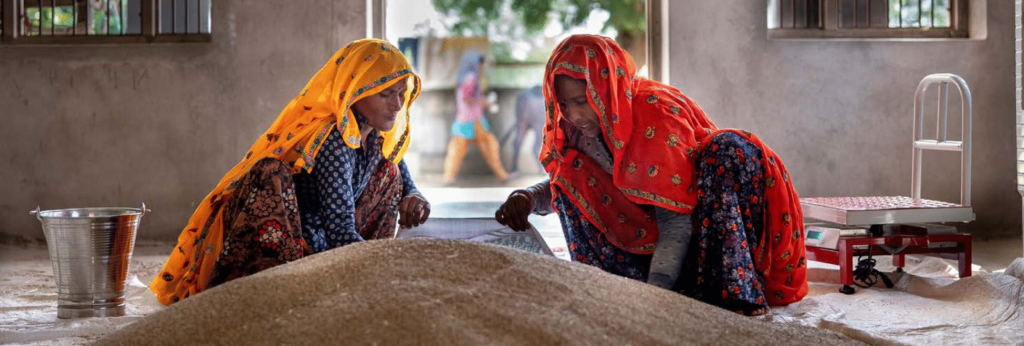
Strategies for Improving Adoption of Improved Nutrition Standards for Take-Home Rations (THR) in India

The Government of India has introduced revised Take-Home Ration (THR) standards under Schedule II of the NFSA 2023. These standards specify age-related macro and micronutrient requirements for THRs provided through the Integrated Child Development Services (ICDS) to enhance maternal and child nutrition. However, no state has yet begun implementing these guidelines. For a detailed discussion, please refer to the ‘Call to Action’.
In this Dialogue, we would like to explore the following questions:
- What are the primary challenges preventing states from adopting these standards?
- How can the central government effectively guide and support states in this process?
- What actions can states and districts take to implement these standards on the ground? We invite concrete suggestions for adopting the new guidelines?
- Are there innovative strategies that could facilitate the adoption of these guidelines? Please share experiential knowledge and best practices from similar contexts?
Your insights will be invaluable in driving this important conversation forward.
Dear team, thank you for hosting this important dialogue. While the revised THR standards under Schedule II of the NFSA 2023 mark an important step toward improving the nutritional adequacy of supplementary feeding under ICDS, I feel two major challenges have slowed state-level adoption and implementation.
First is the limited awareness at the state level- government departments lack the required information to execute these guidelines effectively. Secondly, reformulating THRs to meet enhanced macro- and micronutrient standards often increases production costs, and there is a lack of clarity on changes in the cost norms from the center. We need to work to get these issues addressed to make these guidelines a reality.
This is excellent insight, @RUCHI! I am particularly interested in the relationship you’ve mentioned between THR reformulation and production costs. There is certainly a need for more clarity and specific guidance. I am wondering, from your experience, what do you think might be some realistic and effective approaches (either at central or local level) to minimize or manage these possible cost implications? Is there any documentation or best practices on this?
A systematic, state-by-state understanding of how existing THR compositions compare to the new NFSA 2023 standards could be a helpful first step. Using this baseline information, states would be better able to plan reformulation and estimate budget and infrastructure requirements. A practical way to achieve this is through a rapid national THR audit using a simple, standardized tool to map current nutrient profiles, production capacity, and the cost implications of meeting the new standards. Following this, the new standards could be adopted in a phased manner, focusing on one aspect at a time. This approach allows states to build capacity, adjust procurement and production systems, and monitor impact progressively.
Dear team, it is great that we are discussing this, and collating the voices of all the stakeholders.
One of the main hurdles in implementation of the “new guidelines” is rationing out dry food rations instead of a “fortified RTC/ RTE blended food package” specifically designed and manufactured for THR consumption only. Given the complex permutations and combinations of food items required to meet the standards of the new guidelines, only such a meticulously designed “fortified blended THR food package” can serve the purpose as no assortment of “dry ration food items” can meet these given the “ICDS cost norms” and “dietary behaviour” of the beneficiaries. Secondly, the states should be guided and assisted in conducting the necessary R&D for “designing” such fortified blended THR food package that it is both technically compliant to the standards and ICDS cost norms while also being acceptable to the beneficiaries/consumers.
Dear Team, It is great that we are discussing this topic and gathering views from all stakeholders. One of the main hurdles in implementing the new guidelines is the distribution of “specially formulated fortified RTC/RTE mixed food packages” instead of dry food rations that are designed and manufactured for THR consumption only. It is rich in nutrition which is very important for the community to understand. Given the quality of foods required to meet the standards of the new guidelines, only such carefully formulated “fortified blended THR food packages” can meet the standard. Because considering the ICDS cost norms, no combination of dry ration food items can meet these standards. It should be implemented across India and further research is needed.
I m sorry team to post my response late but l was under the weather since December
But l hope that you appreciate our contribution and reciprocate regarding the challenge posted by Merlene Opondi by the Africa Platform on Social protection.
How do we strengthen coordination of the nutrition and social protection work in Kenya
Thank you.
DOlline